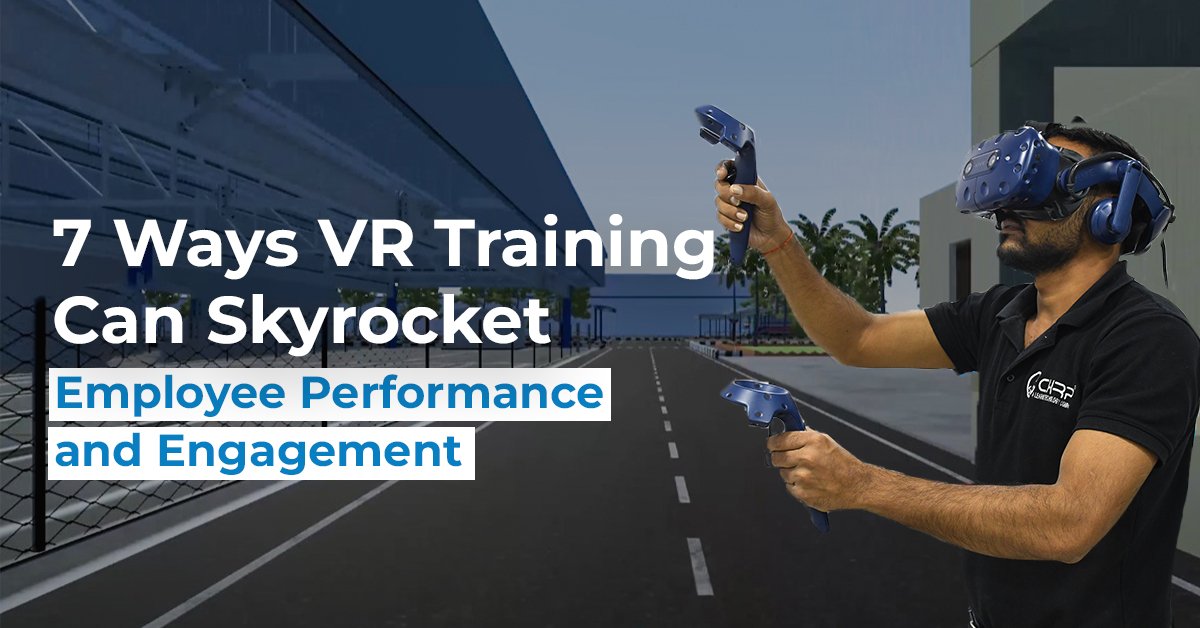
In the past, employee training often meant stale PowerPoint presentations, dry lectures, and endless manuals. But in today’s competitive landscape, organizations need more than just information; they need effective training that translates directly into improved skills, higher productivity, and a more engaged workforce. This is where virtual reality (VR) training emerges as a game-changer.
Far from being a simple gimmick, VR training is a powerful tool in modern workforce development. By immersing employees in realistic, simulated environments, it provides an unparalleled learning experience. So, how can this immersive learning technology transform your company? Here are seven key benefits that drive tangible results.
1. Boosts Knowledge Retention and Recall
Traditional training methods often lead to low knowledge retention. We’ve all been there: listening to a lecture only to forget most of the information a week later. VR training solves this problem by engaging multiple senses and creating memorable, hands-on experiences. When employees actively participate in a virtual scenario, they form stronger neural pathways, leading to deeper memory encoding.
PwC’s research on VR training found that learners were up to 3.75 times more emotionally connected to the content than their classroom counterparts, which is a major factor in improving long-term retention.
2. Creates a Safe, Risk-Free Learning Environment
For industries with high-stakes or dangerous job functions – such as mining, manufacturing, healthcare, and construction – training can be risky and costly. VR training provides a risk-free environment where employees can practice hazardous tasks without any real-world consequences.
Imagine a miner learning to operate a complex piece of machinery or an electrician practicing high-voltage repairs. In a VR simulation, they can make mistakes, learn from them, and repeat the process until they achieve mastery, all in complete safety. This is a significant factor in improving workplace safety and reducing costly accidents.
3. Accelerates Time to Proficiency and Reduces Costs
One of the most compelling reasons for adopting virtual reality corporate training is its ability to dramatically reduce training time and cost. By eliminating the need for expensive travel, physical equipment, and on-site trainers, companies can train a large number of employees simultaneously, no matter their location.
This efficiency is not just theoretical. A major Indian mining company, Mahanadi Coalfields Ltd (MCL), partnered with CHRP-INDIA to deliver VR-based training to over 17,000 employees. This initiative, as reported by The Economic Times, allowed MCL to provide comprehensive safety and operational training to its massive workforce in a fast and efficient way, while reducing overall training costs and time. You can read more about this successful implementation here.
4. Drives Higher Levels of Employee Engagement
Boredom is the enemy of learning. Traditional training methods often feel passive and uninspiring. VR, however, is inherently engaging. It feels like an experience, not a chore. The interactive and immersive nature of VR technology captures and holds an employee’s full attention, leading to higher levels of engagement. This is especially true for younger generations entering the workforce who have grown up with technology and expect a more dynamic learning experience.
Research from PwC found that VR-trained employees were 4 times more focused than their e-learning peers, demonstrating how the immersive experience minimizes distractions.
5. Provides Real-Time, Objective Feedback
In traditional training, feedback can be subjective and delayed. With VR, every action and decision an employee makes is tracked and analyzed in real time. This allows the system to provide immediate, objective feedback, pinpointing specific areas for improvement. This data-driven approach not only helps employees learn faster but also provides valuable insights for L&D managers to identify and address common skill gaps across the organization.
6. Enhances Soft Skills in Realistic Scenarios
While the benefits for technical skills are clear, VR training is also revolutionizing the development of soft skills. It can simulate complex interpersonal situations, such as managing a difficult customer or handling a conflict between colleagues. Employees can practice these difficult conversations in a safe, controlled setting, learning empathy, communication, and leadership skills without the real-world pressure or consequences of getting it wrong.
According to a PwC study, VR learners were 275% more confident to act on what they learned after a VR soft skills training session.
7. Enables Scalable, Consistent Training
Once a VR module is created, it can be deployed to an infinite number of employees across the globe with consistent quality. This solves the challenge of standardizing training across different locations and ensures that every employee receives the exact same high-quality instruction. The initial investment in content creation is easily offset by the ability to scale without added costs for trainers, travel, or physical facilities, leading to a strong return on investment (ROI).
The Future of Training is Immersive
The benefits of VR for employee training are undeniable. By providing immersive, engaging, and cost-effective solutions, it is transforming how companies approach workforce development. CHRP-INDIA is at the forefront of this revolution, helping organizations like Mahanadi Coalfields and others unlock the full potential of their employees through cutting-edge technology.
Ready to see how immersive learning can benefit your organization?
Contact CHRP-INDIA today for a consultation and a live demo of our AR/VR training solutions.