In high-risk industries such as construction, manufacturing, mining, and oil and gas, workplace safety is not just a regulatory requirement, it is a critical business priority. Organizations invest heavily in safety programs to reduce incidents, improve compliance, and protect their workforce. However, traditional training methods often struggle to prepare employees for real-world challenges.
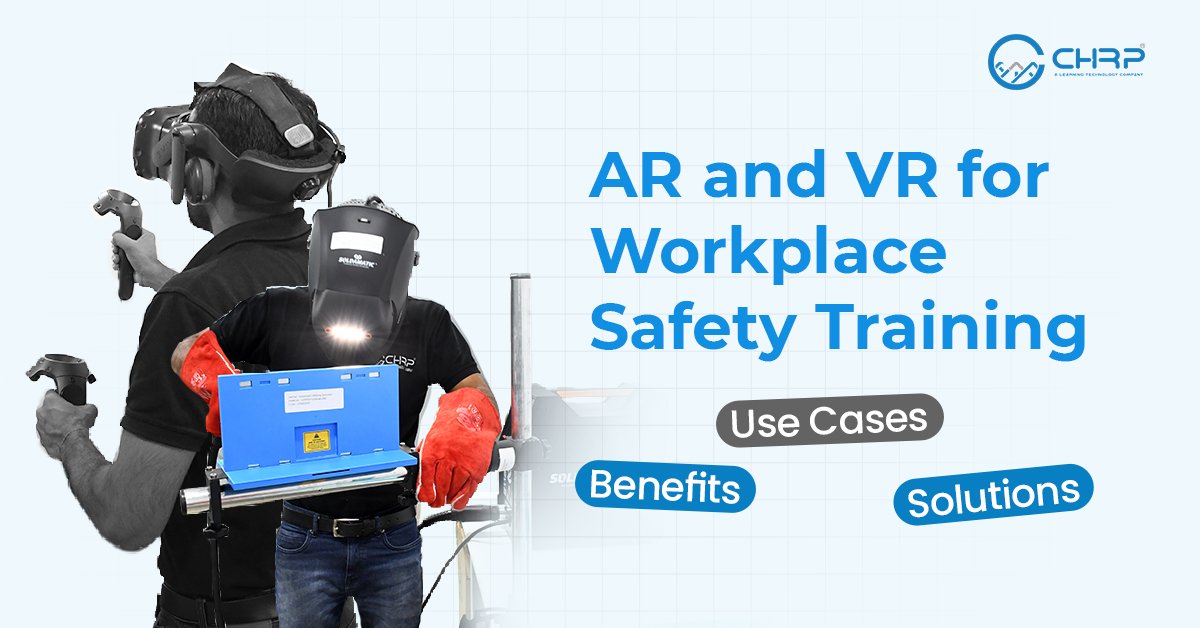
This is where AR and VR for workplace safety training are transforming how organizations approach workforce development. Alongside these technologies, Mixed Reality (MR) is emerging as a powerful addition, bridging the gap between digital simulation and real-world interaction. Together, these immersive technologies are enabling organizations to move beyond theoretical training and deliver practical, experience-driven learning.
The Challenge with Traditional Workplace Safety Training
Most organizations still rely on classroom-based training, presentations, manuals, and occasional demonstrations. While these methods help build foundational knowledge, they often fail to create real preparedness.
Common limitations include:
- Lack of real-world simulation of hazards
- Limited hands-on practice due to safety risks
- Low engagement and retention levels
- Inability to train employees for emergency scenarios
For safety managers and L&D leaders, this creates a gap between training completion and actual workplace performance.
What Is AR, VR, and MR Workplace Safety Training?
Modern workplace safety training solutions are increasingly powered by three immersive technologies:
Virtual Reality (VR)
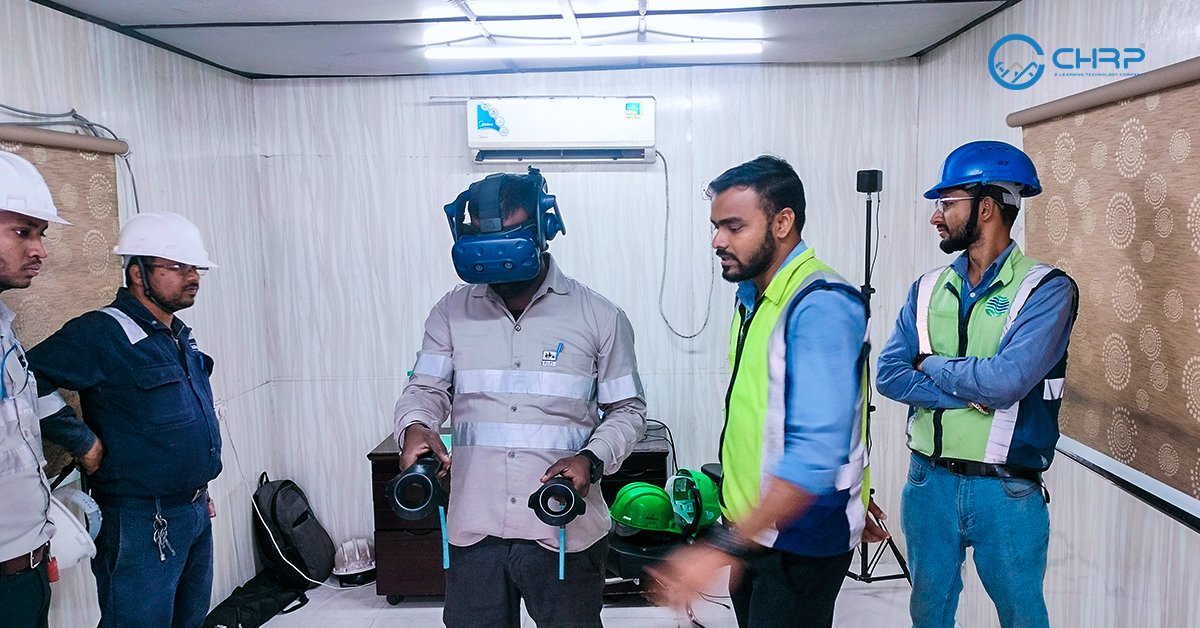
VR places employees inside a fully simulated environment where they can interact with hazards, machinery, and emergency situations in a completely controlled setting.
Augmented Reality (AR)
AR overlays digital instructions, warnings, and guidance onto real-world environments, helping employees perform tasks safely in real time.
Mixed Reality (MR)
Mixed Reality combines elements of both AR and VR. It allows digital objects to interact with the real environment, enabling employees to engage with both physical equipment and virtual scenarios simultaneously.
For example, a technician using MR can:
- See a real machine in front of them
- Interact with virtual components layered onto it
- Practice procedures with real-time guidance and feedback
This creates a highly contextual and realistic training experience.
Key Benefits of AR, VR, and MR for Workplace Safety Training
- Risk-Free Yet Realistic Learning
Employees can experience high-risk scenarios such as equipment failures, confined spaces, or fire hazards without exposure to actual danger.
- Higher Engagement and Retention
Immersive technologies engage multiple senses, making learning more impactful and easier to retain compared to traditional methods.
- Contextual Learning with MR
Unlike traditional simulations, Mixed Reality training solutions allow employees to learn directly within their working environment, improving skill transfer to real tasks.
- Faster Skill Development
Interactive and guided experiences help employees understand procedures quickly and accurately.
- Standardized and Scalable Training
Organizations can deliver consistent training across locations while maintaining quality and safety standards.
- Measurable Performance Outcomes
Advanced VR training solutions and MR platforms provide analytics on learner performance, helping organizations continuously improve training effectiveness.
Real-World Use Cases Across High-Risk Industries
Construction
Workers can simulate working at heights and equipment handling in VR, while AR and MR provide on-site guidance during actual tasks.
Manufacturing
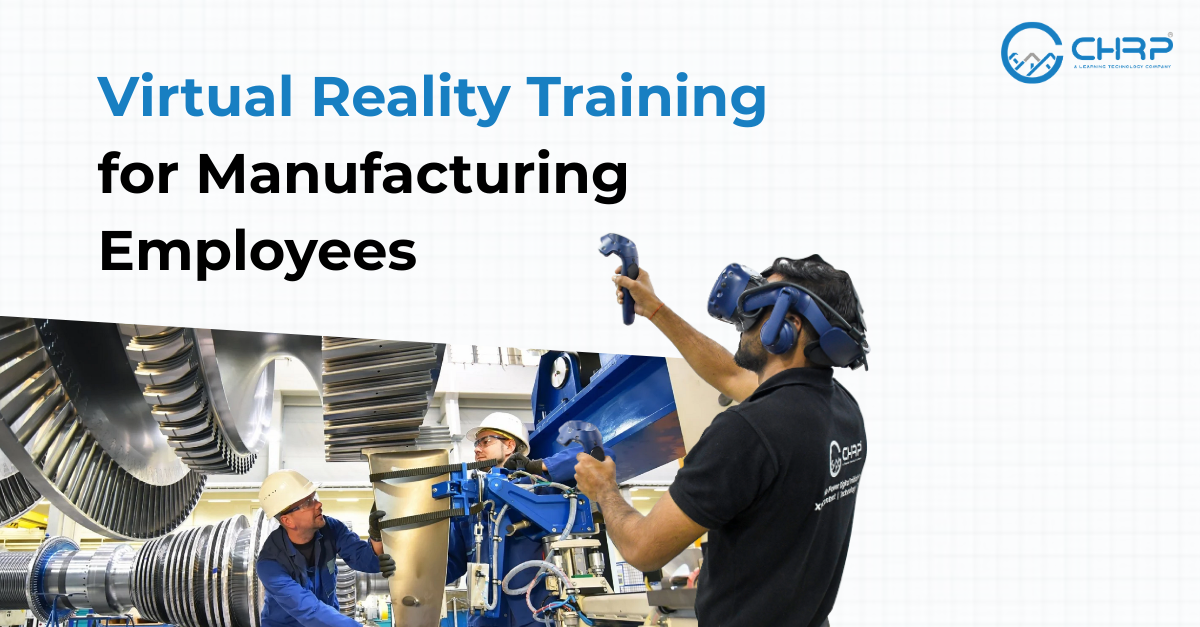
Technicians can practice machine operations in VR and use MR to interact with real equipment enhanced by virtual instructions.
Mining
Employees can experience underground hazards through VR simulations and use AR tools for real-time safety checks.
Oil and Gas
Teams can train for emergency scenarios in VR and use MR-assisted workflows for maintenance and operational safety.
These applications show how AR, VR, and MR workplace safety training solutions are redefining how safety is learned and applied.
Why Organizations Are Investing in Immersive Safety Training
The adoption of AR VR MR workplace safety training solutions is driven by clear business needs:
- Reducing workplace accidents and operational risks
- Improving compliance and audit readiness
- Enhancing workforce productivity and decision-making
- Delivering scalable training across large teams
For decision-makers, immersive training is no longer just an innovation, it is a strategic investment in performance and risk reduction.
Choosing the Right Immersive Training Partner
Successful implementation requires more than technology. Organizations need:
- Industry-specific expertise
- Strong instructional design capabilities
- Realistic and scenario-based simulation design
- Scalable and adaptable solutions
A capable partner ensures that immersive training aligns with both business goals and operational realities.
How CHRP-INDIA Enables AR, VR, and MR Safety Training
CHRP-INDIA delivers advanced AR VR MR workplace safety training solutions tailored to high-risk industries.
Their approach focuses on:
- Scenario-driven simulations that reflect real operational challenges
- Mixed Reality-enabled training for real-world task guidance
- Performance-focused learning design that drives behaviour change
- Scalable deployment across multiple locations and teams
By integrating AR, VR, and MR with instructional design expertise, CHRP-INDIA helps organizations shift from compliance-based training to experience-led safety transformation.
The Future of Workplace Safety Training
Workplace training is evolving toward immersive and intelligent learning environments.
Organizations are moving:
- From passive learning to active simulation
- From theoretical instruction to real-world application
- From isolated training sessions to continuous, on-the-job learning
With the growing role of Mixed Reality alongside AR and VR, training is becoming more contextual, interactive, and aligned with actual work environments.
Conclusion
Workplace safety cannot rely solely on traditional training methods. In high-risk industries, employees need more than knowledge, they need experience.
By adopting AR, VR for workplace safety training, organizations can create safer, more skilled, and more confident workforces. These technologies enable employees to practice, learn, and perform in environments that closely mirror real-world conditions.
For safety managers, L&D leaders, and HR professionals, the path forward is clear:
embrace immersive training to achieve better safety outcomes, stronger workforce performance, and long-term operational excellence.