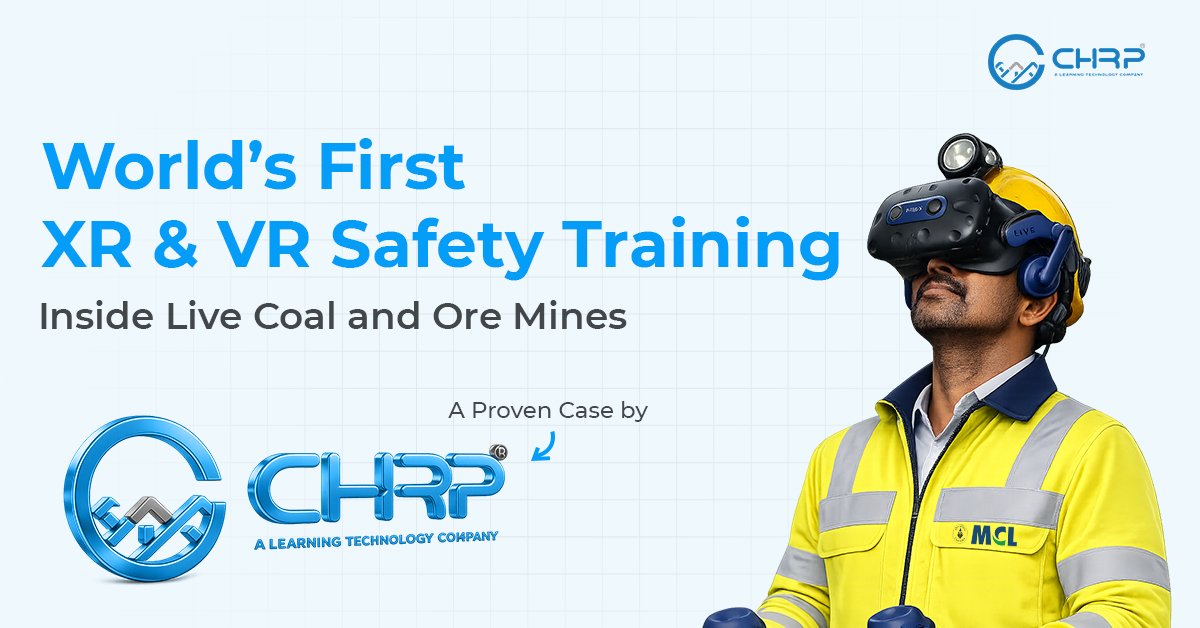
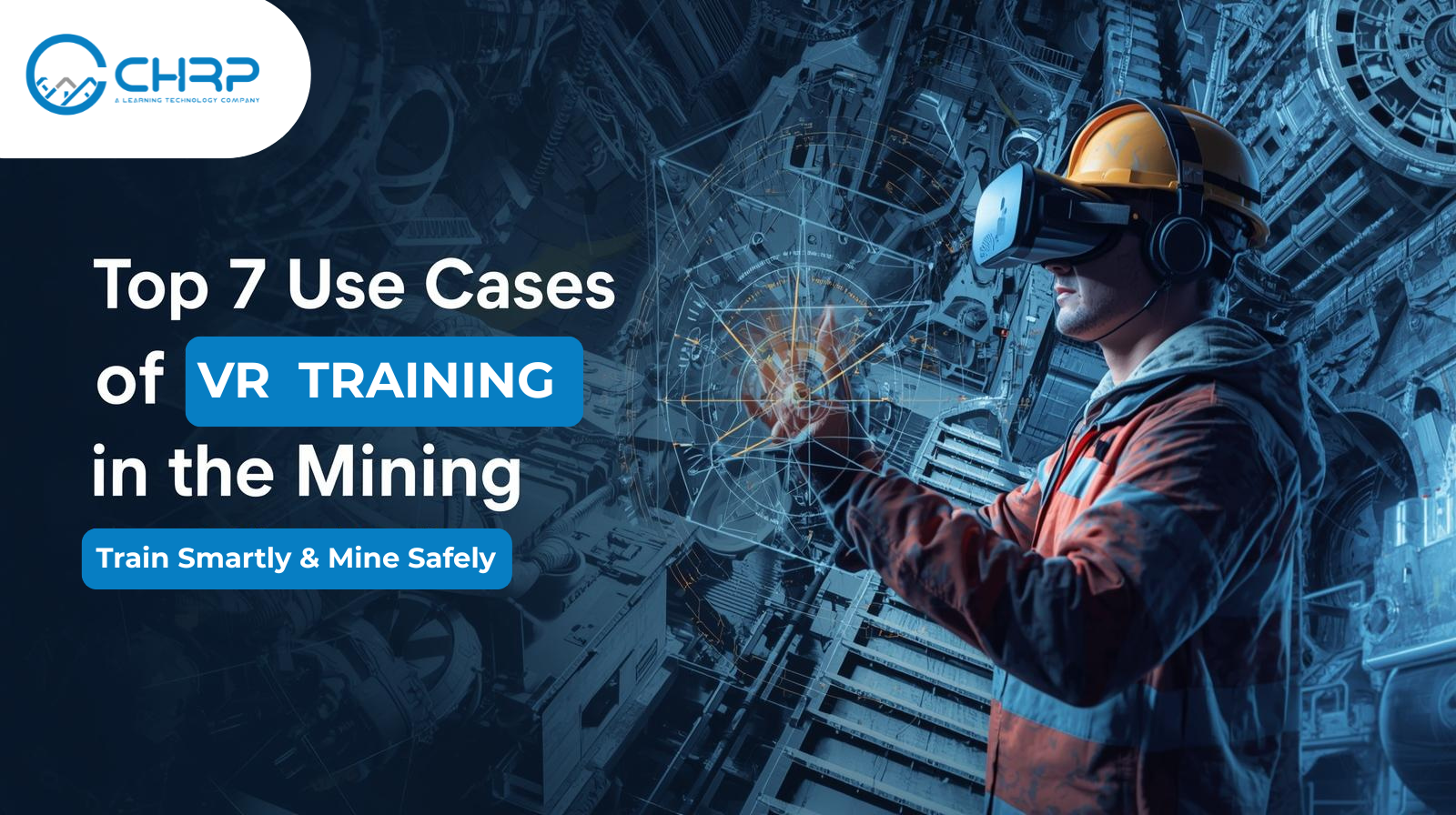
Virtual Reality Usage In Mining.
The mining industry remains one of the most hazardous sectors globally, where even small errors can lead to severe injuries, operational downtime, or costly damages. Traditional training methods like – classroom sessions, manuals, and limited on-site exposure often fail to prepare workers for real-world risks.
This is where Virtual Reality (VR) training is transforming the landscape. By creating immersive, risk-free environments, VR enables workers to gain hands-on experience without stepping into danger. For mining companies focused on safety, efficiency, and workforce readiness, VR is quickly becoming a strategic necessity rather than an optional upgrade.
In this blog, we explore the top 7 use cases of VR training in the mining industry and how it is redefining safety and skill development.
-
Hazard Identification Training
One of the most critical skills in mining is the ability to identify hazards before they escalate. However, exposing trainees to real hazards is neither safe nor scalable.
With VR training, workers can interact with simulated mining environments where they learn to detect:
- Loose rock formations
- Gas leaks
- Equipment malfunctions
- Unsafe working conditions
These simulations can be repeated multiple times, ensuring that workers develop sharp observational skills and respond proactively to risks on-site.
-
Emergency Response Simulations
Emergencies in mining – such as fires, explosions, or tunnel collapses – require immediate and precise action. Traditional training often lacks the intensity and realism needed to prepare workers for such high-pressure situations.
VR bridges this gap by simulating:
- Fire outbreaks in confined spaces
- Underground collapses
- Gas explosion scenarios
Workers can practice decision-making in real-time, improving their confidence and response speed during actual emergencies.
-
Heavy Equipment Operation Training
Operating heavy machinery like excavators, drilling rigs, and dump trucks requires precision and experience. Training directly on live equipment can be expensive and risky, especially for beginners.
VR training allows operators to:
- Learn machine controls in a virtual environment
- Practice complex operations without damaging equipment
- Build confidence before handling real machinery
This significantly reduces training costs while improving operator readiness and safety.
-
Underground Navigation Training
Mining sites, especially underground mines, are complex and often disorienting. Poor navigation can lead to delays, confusion, or even life-threatening situations.
Through VR simulations, workers can:
- Explore realistic mine layouts
- Understand escape routes and safe zones
- Improve spatial awareness in confined environments
This ensures that employees are better prepared to move efficiently and safely within mining sites.
-
Blast Operation Training
Blasting is one of the most sensitive and high-risk activities in mining. Any mistake in procedure or timing can result in catastrophic consequences.
VR enables safe and detailed training for:
- Handling explosives
- Understanding blast sequences
- Following safety protocols step-by-step
Trainees can experience the entire blasting process virtually, ensuring they fully understand procedures before executing them in real conditions.
-
Maintenance and Inspection Training
Regular maintenance and inspection are crucial to prevent equipment failure and ensure smooth operations. However, training workers on live systems can interrupt workflows and increase risk.
With VR training, teams can:
- Learn inspection procedures in detail
- Identify faults and potential failures
- Practice preventive maintenance routines
This improves equipment reliability and reduces unexpected downtime.
-
Working at Heights and Confined Spaces
Mining operations often require workers to operate in extreme conditions—whether at elevated platforms or within narrow tunnels.
VR simulations prepare workers for:
- Working at heights with safety harnesses
- Navigating confined spaces
- Handling restricted movement environments
By practicing in a virtual setting, workers gain confidence and reduce the likelihood of accidents in real scenarios.
Key Benefits of VR Training in Mining
Implementing VR training in mining operations delivers measurable advantages:
- Enhanced Safety: Workers are trained without exposure to real hazards
- Improved Retention: Learning by doing leads to better memory retention
- Cost Efficiency: Reduces equipment damage and training-related expenses
- Faster Onboarding: New employees become job-ready quicker
- Standardized Training: Ensures consistency across multiple locations
The Future of Mining Training
As mining operations become more complex and safety regulations continue to tighten, companies must adopt smarter training solutions. VR is not just improving how training is delivered – it is redefining how workers learn, react, and perform in high-risk environments.
Organizations that invest in immersive training today are building a safer, more efficient, and future-ready workforce.
Conclusion
The adoption of VR training in the mining industry is no longer a trend, it is a strategic shift. From hazard identification to emergency response and equipment handling, VR enables practical, risk-free learning that traditional methods cannot match.
For mining companies aiming to reduce accidents, improve performance, and stay ahead in a competitive landscape, immersive training is the way forward.
Looking to Implement VR Training?
If your organization is exploring advanced training solutions for mining operations, adopting immersive VR can significantly improve safety and efficiency.
CHRP-INDIA specializes in developing customized VR training solutions tailored to high-risk industries like mining, manufacturing, and energy.
Connect with our team to explore how immersive learning can transform your workforce training.