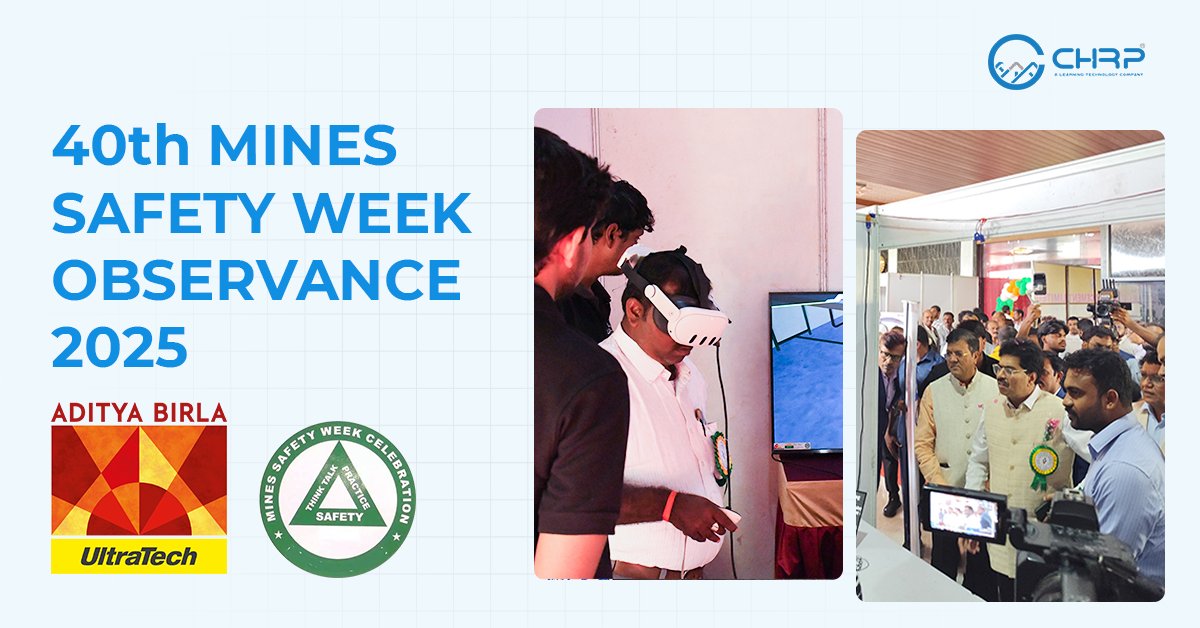
The 40th Mines Safety Week 2025 concluding event brought together senior mining officials, industry leaders, safety professionals, mine managers and workforce representatives from across Telangana and Andhra Pradesh.
Held in Hyderabad on 25 July 2026, the event focused on strengthening workplace safety awareness, encouraging responsible behaviour and supporting the mining sector’s long-term objective of preventing accidents and occupational illnesses.
During the event, CHRP-INDIA showcased a Virtual Reality-based mining safety training experience. Mining professionals had the opportunity to explore how immersive simulations can help workers recognise hazards, understand procedures and practise safety-related decisions in a controlled environment.
The event also provided a valuable opportunity to discuss the practical role of VR in mining safety training with officials from the Directorate General of Mines Safety, industry dignitaries and experienced mining safety professionals.
40th Mines Safety Week 2025 Concluding Event in Hyderabad
The valedictory function of the 40th Mines Safety Week 2025 was organised by the Mines Safety and Productivity Association in Hyderabad.
The event formed part of a wider initiative to improve safety standards, prevent workplace accidents and strengthen safety awareness among mine workers.
According to the organisers, around 68 limestone and metal mines from Telangana and Andhra Pradesh participated in the safety competitions and awareness programmes.
Awards and certificates of appreciation were presented to mines, officials and workers who demonstrated strong performance across important safety areas, including:
- Dust control
- Workplace illumination
- Haul-road maintenance
- Operational safety
- Accident prevention
- Worker safety awareness
The concluding event created a useful platform for regulators, mining organisations and safety professionals to recognise good practices and discuss the continuing need for stronger safety standards across mining operations.
Event Theme: Safety Is My Responsibility & Zero Harm in Mines
The theme of the event was “Safety Is My Responsibility & Zero Harm in Mines”.
This message reflects an important principle in mining safety. Safe operations cannot depend only on safety departments, written policies or periodic inspections. They also depend on every worker understanding the risks associated with their role and taking responsibility for following approved procedures.
Personal responsibility for safety includes:
- Wearing the correct personal protective equipment
- Inspecting tools and equipment before use
- Following approved work procedures
- Identifying hazards before beginning a task
- Reporting unsafe conditions
- Avoiding shortcuts
- Supporting colleagues in following safety requirements
- Responding correctly during an emergency
The theme also connects closely with practical safety training. Workers are more likely to take responsibility when they understand not only what a procedure requires, but also why each safety control is necessary.
Key Dignitaries and Industry Participation
The event was attended by senior representatives from the Directorate General of Mines Safety and leaders from the mining and cement industries.
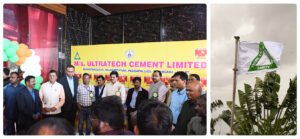
Shri Ujjwal Tah, Director-General of Mines Safety, attended as the Chief Guest.
The Guests of Honour were:
- T. R. Kannan, Deputy Director-General of Mines Safety, South Central Zone
- Anil Bajaj, Chief Operating Officer, UltraTech Cement Limited
Speaking at the event, the dignitaries highlighted the role Mines Safety Week has played since the 1960s in creating greater awareness of workplace safety among mine workers.
They emphasised the importance of implementing stringent safety standards and working towards the long-term objective of achieving zero accidents.
The speakers also drew attention to occupational health risks such as silicosis and hearing impairment. These conditions require preventive controls, continuous monitoring, worker awareness and consistent compliance with safety procedures.
The participation of mining officials, industry representatives, safety professionals and workers reinforced the importance of collaboration in improving safety standards across the sector.
CHRP-INDIA’s VR Mining Safety Training Showcase
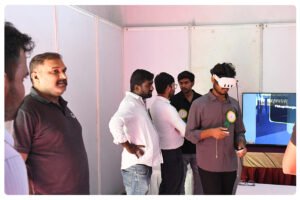
The VR mining safety training showcase gave attendees an opportunity to experience immersive learning first-hand.
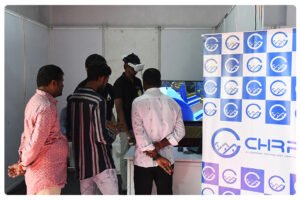
Using a VR headset, participants could enter a simulated industrial environment and understand how workers can be trained to observe workplace conditions, identify risks and respond to safety-related situations.
The demonstration attracted interest from:
- Mining safety experts
- Mine managers
- HSE professionals
- Safety officers
- Training managers
- Operations leaders
- Industry representatives
Unlike passive training formats, immersive learning allows the learner to participate directly in the experience.
Instead of only watching a safety video or reading a procedure, the learner can inspect the environment, make decisions and receive feedback based on their actions.
The demonstration showed how VR can support mining safety training by enabling workers to:
- Explore simulated environments safely
- Recognise potential hazards
- Follow procedural steps
- Practise decision-making
- Understand unsafe actions
- Receive immediate feedback
- Repeat activities where further practice is required
The response from attendees reflected a growing interest in training methods that connect safety knowledge with practical experience.
Interactions with DGMS Officials and Industry Leaders
One of the most meaningful aspects of the event was the opportunity to interact with officials and professionals who work closely with mining safety.
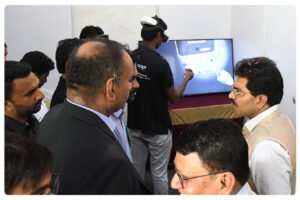
The CHRP-INDIA team had the opportunity to present the VR-based mining safety training approach to Director General Ujjwal Tah and other dignitaries and industry representatives attending the event.
The demonstration helped explain how immersive learning can complement existing safety initiatives through controlled and repeatable training scenarios.
Discussions focused on the potential use of VR for areas such as:
- Hazard-identification training
- Equipment familiarisation
- Emergency-response preparation
- Procedural safety learning
- High-risk task preparation
- Refresher training
- Workforce assessment
These interactions connected immersive technology with the practical safety priorities of mining organisations.
The purpose of VR is not to replace instructor-led sessions, site inductions or supervised field training. Its value lies in preparing workers more effectively before they perform tasks in live and potentially hazardous environments.
Why Practical Safety Training Matters in Mining
Mining operations involve complex environments where risks can change quickly and incorrect decisions can have serious consequences.
Workers may operate around:
- Heavy mining machinery
- Haul trucks and mobile equipment
- Blasting areas
- Electrical installations
- Excavated zones
- Steep or uneven surfaces
- Confined spaces
- Dust and high-noise environments
- Moving materials
- Maintenance activities
Traditional safety training provides essential knowledge. However, knowing a rule is not always the same as applying it correctly in a real situation.
A worker may understand a procedure during a classroom session but still find it difficult to respond when facing moving equipment, restricted visibility, time pressure or an unfamiliar work environment.
Practical training helps close the gap between knowledge and action.
Workers need opportunities to:
- Observe realistic workplace hazards
- Make safety-related decisions
- Practise approved procedures
- Learn from mistakes
- Build confidence
- Repeat critical activities
Recreating hazardous mining incidents for training can be difficult, disruptive and unsafe. Immersive learning offers a controlled alternative for practising selected situations without exposing workers to the actual hazard.
Key Reflections from the Event
The 40th Mines Safety Week 2025 concluding event reinforced several important observations about the future of mining safety training.
- Mining professionals continue to look for practical methods that can improve workforce preparedness.
- Technology creates value when it addresses a clearly defined safety or performance requirement. The purpose should not be to introduce VR simply because it is new.
- Immersive learning can strengthen existing safety programmes by providing experiences that are difficult to deliver through classroom instruction alone.
The engagement during the showcase demonstrated interest in using VR to support:
- Safer practical training
- Stronger hazard awareness
- Consistent procedural learning
- Equipment familiarisation
- Emergency preparedness
- Continuous workforce development
It was encouraging to see safety experts, managers and industry professionals experience the simulation, ask practical questions and discuss how immersive learning could be applied within their own operations.
The event also reinforced that successful safety training requires more than technology. It depends on accurate procedures, appropriate learning design, subject matter expertise and clear alignment with workplace realities.
Conclusion
The theme “Safety Is My Responsibility” is a reminder that mining safety depends on individual awareness, correct decisions and consistent workplace behaviour.
VR-based mining safety training can help workers practise that responsibility before entering high-risk operational environments.
By combining approved safety procedures with realistic scenarios, immersive learning enables workers to identify hazards, make decisions, receive feedback and repeat activities within a controlled setting.
The 40th Mines Safety Week 2025 concluding event provided a valuable opportunity to demonstrate how Virtual Reality can complement classroom instruction, site induction, practical training and ongoing safety programmes.
The experience also highlighted the importance of continued collaboration between regulators, mining organisations, safety professionals and learning specialists in preparing workers for complex operational environments.