Organizations across the globe are making significant investments in digital learning as part of their workforce transformation strategies. From onboarding and compliance to leadership development and technical training, learning has become a critical business function.
However, despite these investments, many enterprises are not achieving the expected outcomes. While learning platforms are implemented and courses are deployed successfully, the real challenge begins when these initiatives need to scale across teams, locations, and business functions. At this stage, learning programmes often lose consistency and fail to deliver measurable impact.
This gap is driving a shift towards more effective approaches, with scenario-based learning in corporate training emerging as a key solution in 2026.
The Real Challenge Behind Enterprise Learning
In most organizations, the issue is not the lack of content or technology. Enterprises today have access to advanced learning platforms, diverse content formats, and modern tools.
The real challenge lies in how learning is structured, managed, and aligned with business objectives. Learning is no longer just about delivering courses. It requires a system that ensures scalability, consistency, and measurable outcomes.
Where Traditional Learning Starts to Break Down
As enterprises attempt to scale learning initiatives, several common challenges emerge.
Lack of Scalable Learning Strategies
Many learning programmes are designed to address immediate needs rather than long-term scalability. While they may work effectively within a specific team or function, they often fail when expanded across the organisation. Without a structured framework, learning becomes fragmented and difficult to manage.
Increasing Pressure on L&D Teams
L&D teams are expected to handle content creation, platform management, learner support, and performance tracking, all while responding to evolving business needs. This creates capacity constraints, making it difficult to maintain quality and consistency.
Fragmented Learning Ecosystems
Learning is often delivered through multiple vendors and platforms, resulting in inconsistent learner experiences and duplication of efforts. Instead of a unified strategy, organizations end up managing disconnected initiatives.
Difficulty Demonstrating Business Impact
While completion rates and participation metrics are easy to track, linking learning outcomes to business performance remains a challenge. Without clear impact measurement, it becomes difficult to justify continued investment.
The Shift Toward Experiential and Scenario-Based Learning
Leading organizations are now shifting from a delivery-focused model to a strategy-driven approach. The focus is moving from “what content is delivered” to “how effectively employees apply what they learn.”
This is where scenario-based learning in corporate training plays a crucial role.
Scenario-based learning enables employees to engage in real-world situations, make decisions, and understand consequences in a controlled environment. This aligns closely with experiential learning in enterprises, where learning happens through application rather than passive consumption.
What Is Scenario-Based Learning
Scenario-based learning involves creating realistic, job-specific situations where learners actively participate and make decisions.
Instead of simply reading or watching content, employees:
- Solve problems in simulated environments
- Respond to real-world challenges
- Learn from outcomes and feedback
This approach transforms learning from knowledge acquisition into skill development.
The Role of Immersive Learning Solutions
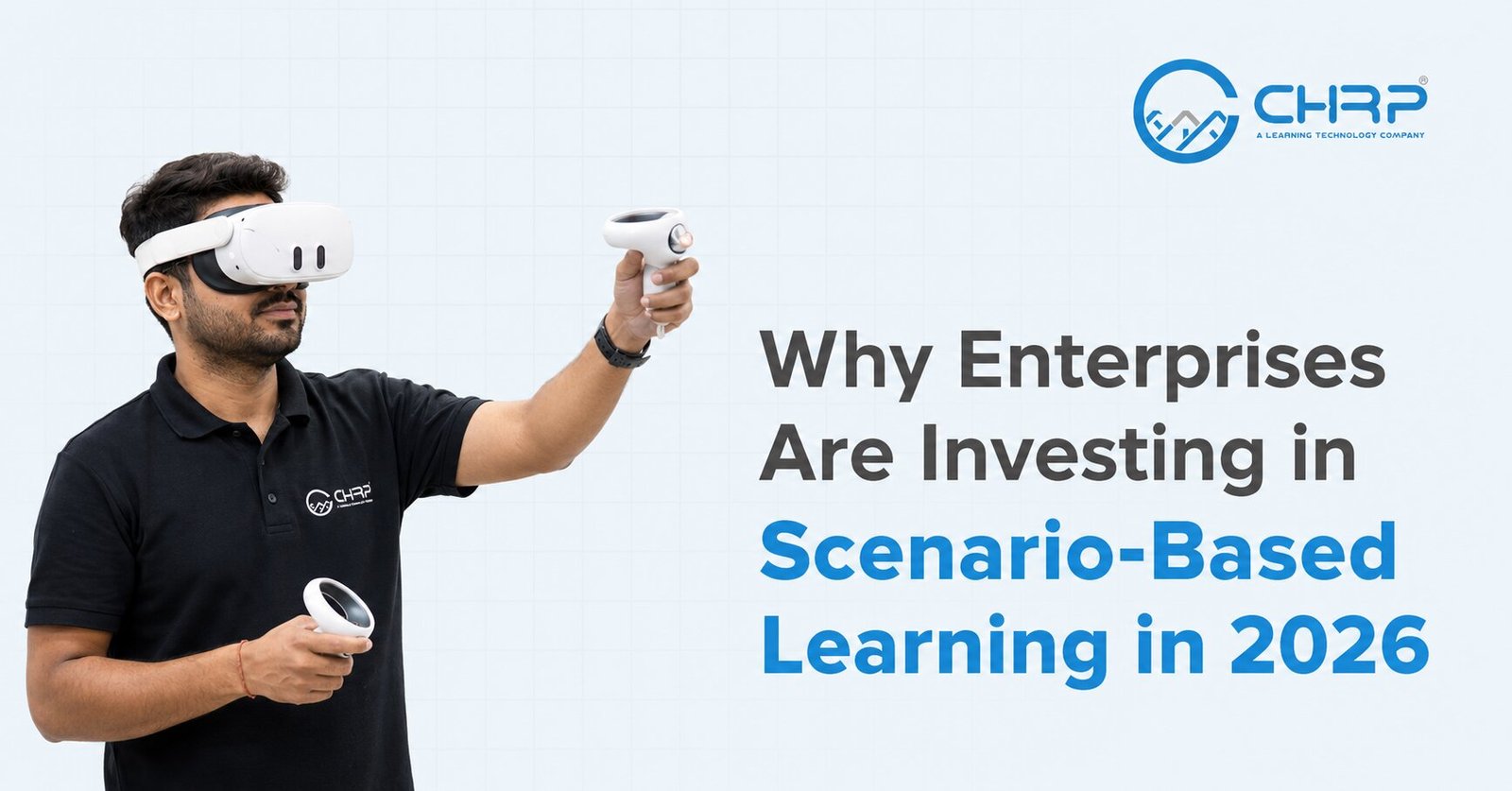
One of the key enterprise learning and development trends 2026 is the adoption of immersive learning solutions powered by advanced technologies.
Enterprises are increasingly using:
- XR-based training solutions
- Virtual reality training for enterprises
- Augmented reality training in India
These technologies enhance scenario-based learning by making it more interactive, realistic, and impactful.
Key Use Cases of VR in Enterprises
Workplace Safety Training
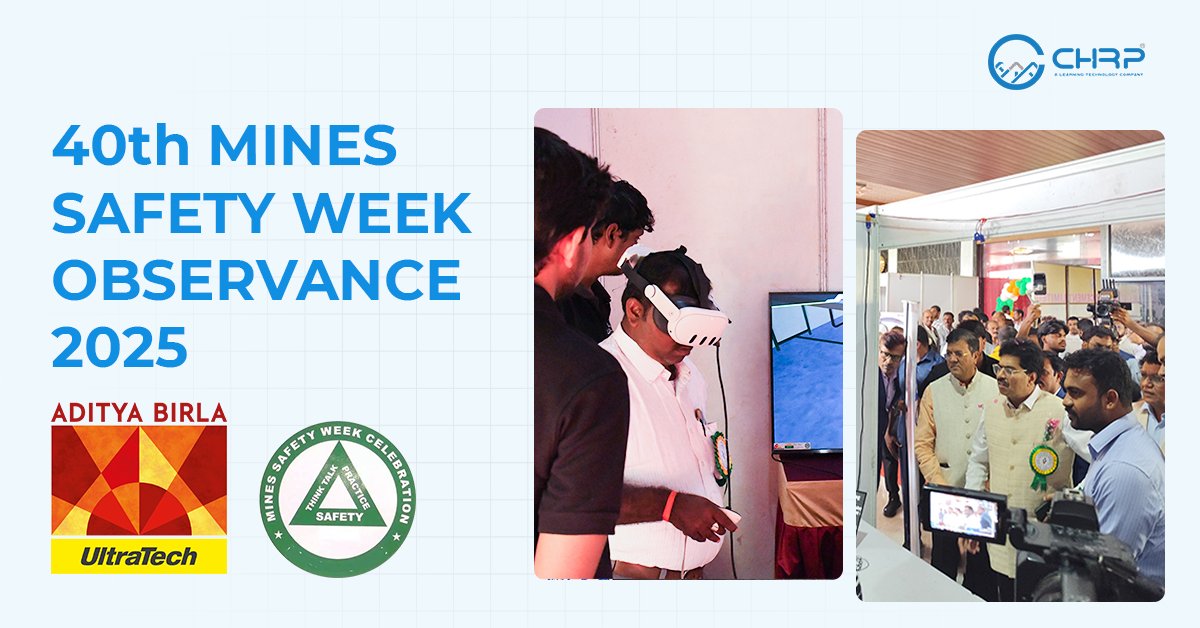
In high-risk industries, workplace safety training VR is transforming how employees prepare for hazardous situations. Workers can experience risks in a safe environment and practice responses without real-world consequences.
Technical and Operational Training
For complex processes and equipment, simulation-based training for employees enables hands-on practice. Employees can troubleshoot, operate systems, and repeat procedures until they gain confidence.
Leadership and Decision-Making
Scenario-based learning helps leaders practice critical decision-making, communication, and conflict resolution in realistic situations.
Sales and Customer Interaction
Sales teams can simulate customer interactions, handle objections, and refine their approach, directly improving business performance.
Why Enterprises Are Prioritising Scenario-Based Learning
The growing adoption of scenario-based learning is driven by clear business needs.
Improved Knowledge Retention
Learning through experience significantly improves retention compared to traditional methods.
Better Decision-Making Skills
Employees develop the ability to respond effectively in real-world situations.
Risk-Free Learning Environment
Employees can practice without fear of failure or real-world consequences.
Stronger Alignment with Business Outcomes
Training becomes directly linked to performance, making it easier to measure impact.
The Role of XR in Enterprise Learning
XR-based training solutions are redefining corporate training by combining physical and digital learning environments.
- Virtual Reality (VR) creates fully immersive simulations
- Augmented Reality (AR) enhances real-world tasks with digital overlays
- Mixed Reality (MR) blends both for interactive experiences
Together, these technologies are enabling scalable and effective corporate training solutions in India.
How Leading Organizations Are Moving Forward
Organizations that successfully adopt modern learning approaches share key characteristics.
They build structured learning ecosystems that integrate content, platforms, and learner journeys into a unified framework. This ensures consistency and scalability.
They establish governance and standardisation processes to maintain quality across programmes.
They prioritise learner experience by designing engaging, role-specific learning journeys.
They use data and analytics to continuously measure and improve learning effectiveness.
The CHRP-INDIA Perspective
As enterprises in India continue to evolve, the need for advanced learning strategies is increasing. Scenario-based learning, combined with immersive technologies, is becoming essential for building future-ready workforces.
CHRP-INDIA supports organizations with immersive learning solutions, XR-based training solutions, and corporate training solutions in India that focus on real-world performance and measurable outcomes.
Conclusion
Enterprise learning is undergoing a fundamental transformation. The focus is shifting from content delivery to performance-driven learning.
Scenario-based learning in corporate training is enabling organizations to bridge the gap between knowledge and application. By integrating immersive technologies and experiential learning approaches, enterprises can create scalable, impactful, and measurable training programmes.
As organizations align learning with business outcomes, those that adopt scenario-based and simulation-driven approaches will be better positioned to develop skilled, confident, and future-ready employees.