Introduction: What Really Happens Inside Manufacturing Companies
If you speak to a plant head, a sales manager, or an L&D leader in a manufacturing company, you will hear a similar concern.
We have trained our people, but they still struggle when it comes to product understanding.
This is not because employees are not capable. It is because the way product knowledge is delivered does not match how work actually happens.
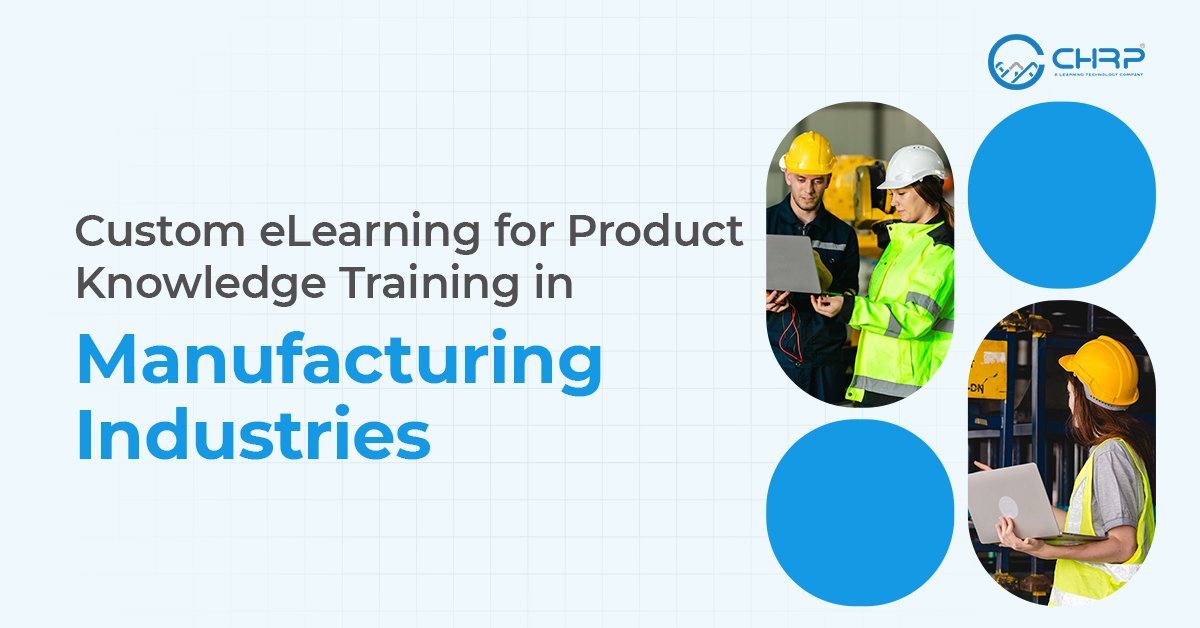
In real manufacturing environments, products are complex. They involve multiple configurations, use cases, safety conditions, and operational dependencies. Explaining this through slides or manuals does not work.
Employees need to see it, interact with it, and experience it.
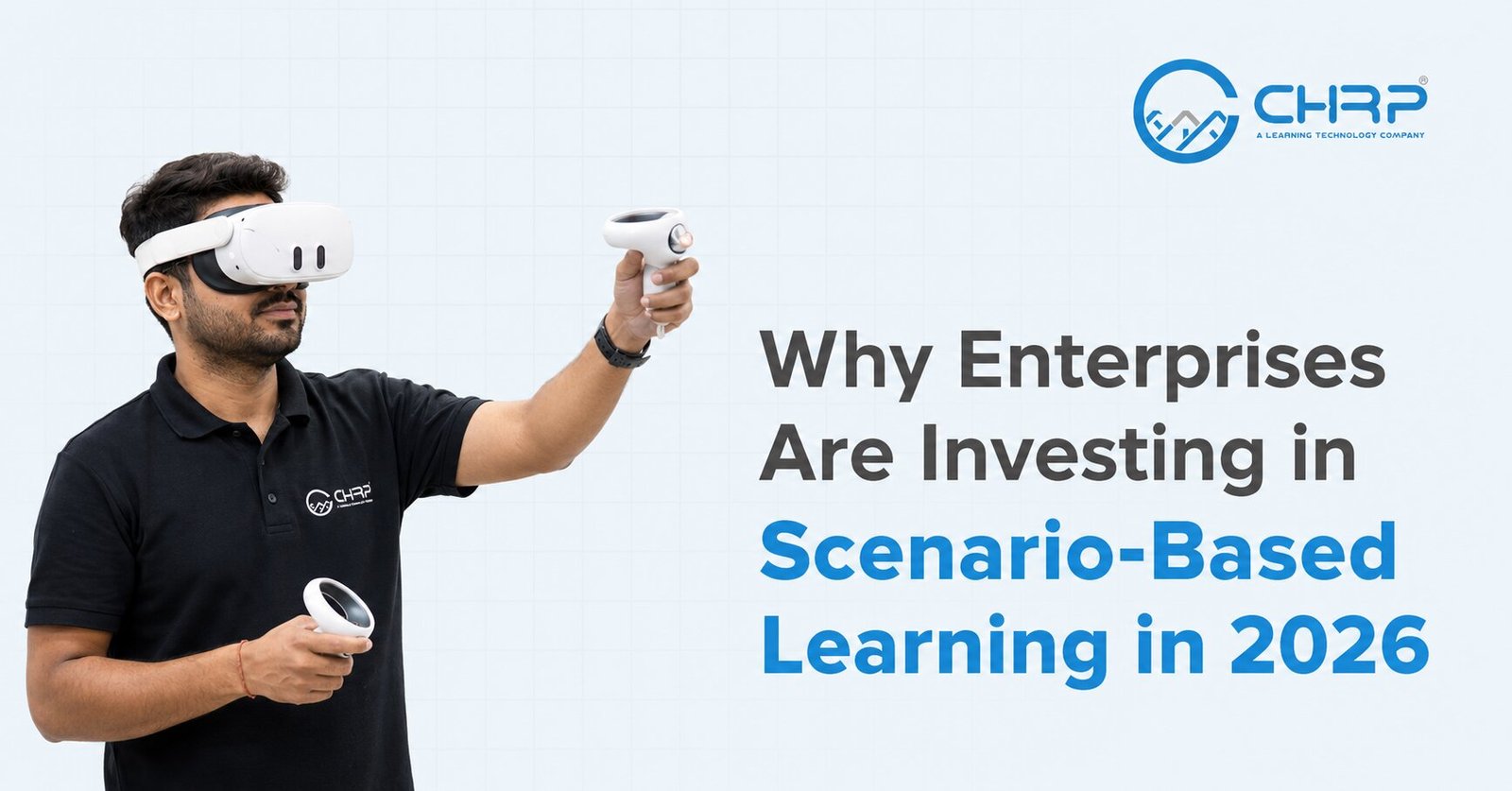
This is why companies are moving toward custom eLearning solutions, supported by AR (Augmented Reality), VR (Virtual Reality), and MR (Mixed Reality), to improve product knowledge training in a practical and scalable way.
The Real Requirement: Not Just Training, but Understanding
In manufacturing, product knowledge is not about memorizing specifications. It is about understanding how a product behaves in real conditions.
A factory operator needs to know how a machine reacts under load.
A maintenance technician needs to understand failure points.
A sales engineer needs to explain value in real customer scenarios.
But in most companies, training is still delivered in a disconnected way. Employees attend sessions, go through presentations, and then return to the floor where reality looks very different.
This gap between training and real-world application is the core problem.
Modern industrial workforce training is now focused on closing this gap.
Why Traditional Product Training Fails in Manufacturing
Many organizations still rely on classroom training, PDFs, and occasional demonstrations. While these methods provide basic information, they do not create real understanding.
In a real factory environment:
- Employees do not have time to revisit manuals
- Trainers cannot simulate real product conditions
- Learning is dependent on individual experience
- Knowledge transfer is inconsistent across locations
For companies with multiple plants and large teams, this becomes even more complex. Training quality varies, onboarding slows down, and product knowledge gaps continue to exist.
This is why digital learning for manufacturing employees is becoming a necessity, not an option.
How Custom eLearning Aligns with Real Manufacturing Needs
Custom eLearning is designed based on actual business requirements, not generic templates.
In manufacturing, this means:
- Training built around real products
- Content aligned with factory workflows
- Scenarios based on real operational challenges
- Learning paths designed for different roles
Instead of explaining a product in theory, employees are guided through how it works, how it behaves, and how it should be handled.
This creates clarity and confidence.
Where AR, VR, and MR Add Real Value
This is where immersive technologies make a significant difference.
Virtual Reality (VR) for Product Understanding
VR allows employees to enter a simulated environment where they can interact with products as if they were real.
For example, a worker can:
- Explore internal components of a machine
- Understand assembly and disassembly processes
- Experience failure scenarios safely
This is especially useful for complex or high-risk equipment where real training is difficult.
Augmented Reality (AR) for On-the-Job Learning
AR brings learning directly into the work environment.
A technician can use a device to:
- View step-by-step instructions overlaid on equipment
- Identify components instantly
- Perform tasks with guided support
This reduces dependency on manuals and improves accuracy during operations.
Mixed Reality (MR) for Advanced Training
MR combines physical and digital environments.
Employees can interact with real equipment while receiving digital guidance. This is highly effective for advanced product training and troubleshooting.
Business Impact of Immersive Product Knowledge Training
When companies implement custom eLearning solutions with AR, VR, and MR, the results are not just limited to learning.
They impact business performance.
Employees understand products faster, which improves onboarding. Errors reduce because workers know exactly how to handle equipment. Sales teams become more confident because they can explain products clearly. Service teams resolve issues faster because they understand systems in depth.
For large manufacturing organizations, this leads to:
- Improved productivity
- Reduced downtime
- Better product quality
- Stronger customer satisfaction
This is why corporate eLearning solutions are now closely linked to operational efficiency.
Scaling Product Training Across Locations
One of the biggest challenges in manufacturing is scale.
Companies operate across multiple plants, regions, and even countries. Ensuring consistent product knowledge across all locations is difficult.
This is where an LMS for manufacturing companies becomes critical.
With an LMS:
- Training can be delivered uniformly
- Employees can access content anytime
- Progress can be tracked centrally
- Knowledge gaps can be identified quickly
When combined with immersive learning, this creates a powerful system where training is both scalable and effective.
Real-World Use Case: Product Launch Training
Consider a manufacturing company launching a new product line.
Traditionally, training would involve presentations, manuals, and limited demonstrations. Employees would take time to understand the product, leading to delays and errors.
With custom eLearning and VR:
- Employees can explore the product virtually before it is physically available
- Operators can learn handling procedures in a simulated environment
- Sales teams can experience real customer scenarios
- Service teams can practice troubleshooting
This reduces time-to-competency and ensures that all teams are aligned from day one.
How CHRP-INDIA Delivers Real-World Training Solutions
CHRP-INDIA works with manufacturing companies to build training solutions that reflect real operational needs.
The focus is not just on creating digital content, but on solving actual training challenges.
This includes:
- Designing product-specific learning modules
- Developing immersive VR and AR training experiences
- Creating role-based learning paths for different teams
- Ensuring scalability across locations and workforces
With experience in high-risk and complex industries such as manufacturing, mining, and energy, CHRP-INDIA understands how to translate technical products into effective learning experiences.
The Future: Intelligent and Experience-Based Learning
The future of enterprise learning solutions in manufacturing is moving toward intelligent systems.
Training will become:
- More personalized based on employee roles
- More adaptive based on performance data
- More integrated with daily work environments
AR, VR, and MR will continue to play a key role in making learning more practical and experience-driven.
Companies that adopt these approaches early will build a more capable and efficient workforce.
Conclusion:
In manufacturing, product knowledge is not about information. It is about capability.
Employees must not only know the product but also understand how to apply that knowledge in real situations.
Traditional training methods cannot deliver this consistently.
This is why custom eLearning solutions, combined with immersive technologies like AR, VR, and MR, are becoming essential for modern employee training solutions.
Organizations that invest in this approach are not just improving training. They are improving performance across the entire business.
If your organization is facing challenges in product knowledge training and looking to build scalable, real-world learning systems, the right partner can make a significant difference.
CHRP-INDIA helps manufacturing companies design and deliver training that is practical, immersive, and aligned with real business needs.
Connect with CHRP-INDIA to build training solutions that truly work in real environments.