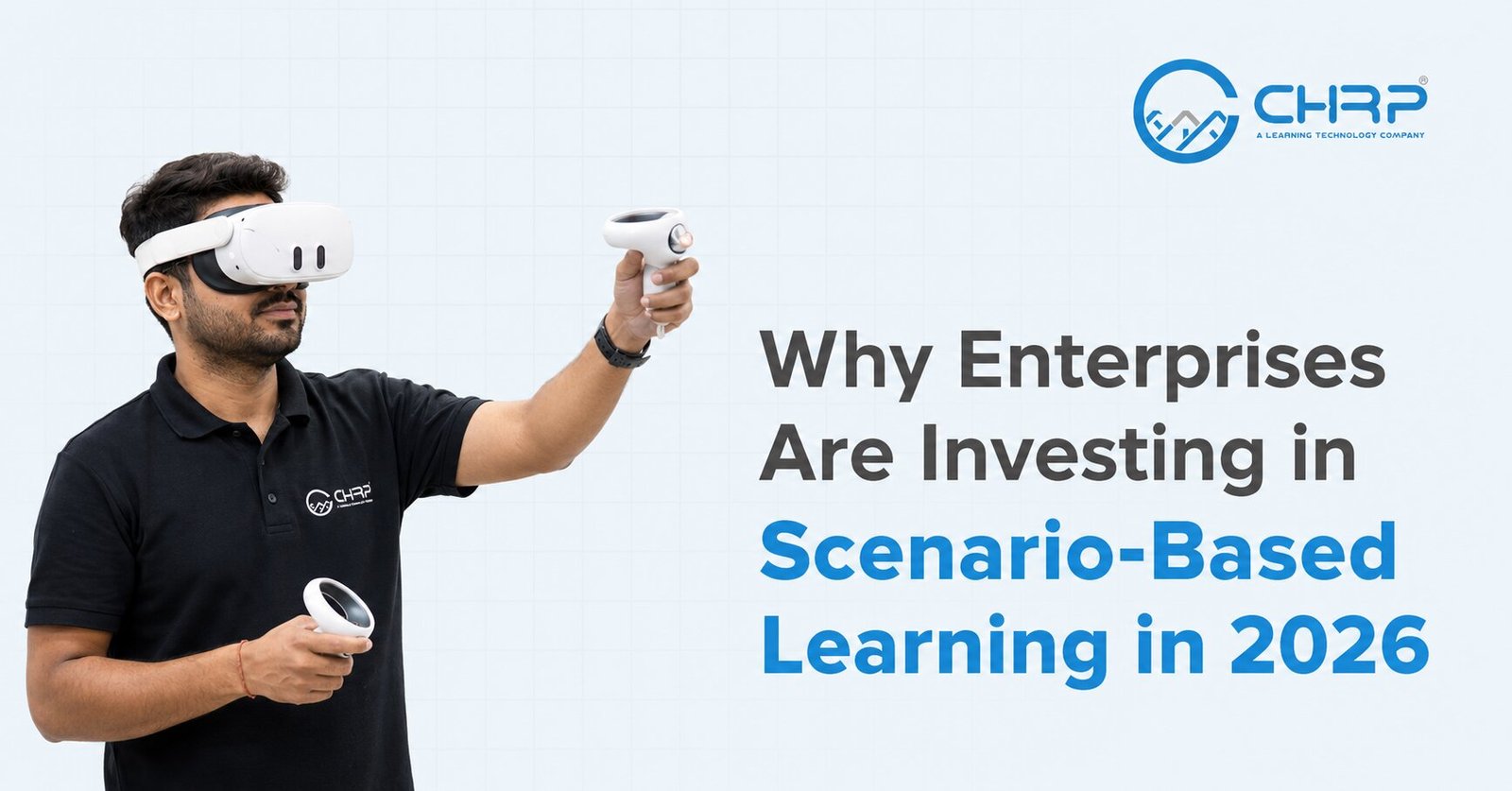
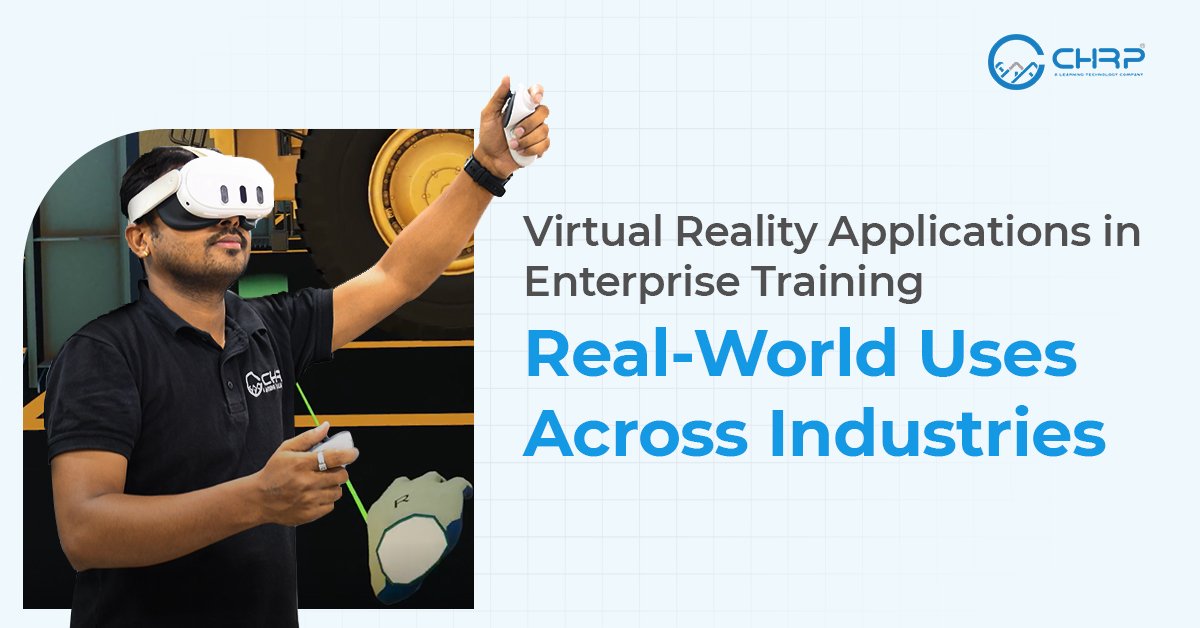
Virtual reality is no longer just a gaming technology. Today, businesses across industries are using virtual reality applications to train employees, improve safety, reduce operational risks, and create more engaging learning experiences.
From manufacturing plants and oil refineries to hospitals and corporate offices, VR training is becoming a practical business tool for workforce development.
Unlike traditional classroom training, virtual reality creates realistic environments where employees can practice tasks, make decisions, and learn through experience. This makes learning faster, safer, and far more engaging.
In this blog, let’s look directly at the most important virtual reality applications being used by enterprises today.
Virtual Reality Applications in Manufacturing
One of the biggest uses of VR training is in manufacturing.
Factories and industrial facilities often use complex machinery and operational processes that require hands-on experience. Training employees directly on live equipment can be expensive and risky.
With virtual reality in manufacturing, companies can create immersive simulations where workers learn how to:
- Operate machinery
- Perform maintenance tasks
- Follow production workflows
- Handle emergency situations
- Troubleshoot equipment problems
Employees can practice repeatedly in a safe virtual environment before working on actual machines.
This improves workforce confidence while reducing errors and downtime.
VR Safety Training for Industrial Workers
Safety training is one of the most valuable virtual reality applications in high-risk industries.
Traditional safety training usually depends on presentations, manuals, or videos. However, employees often learn better when they experience situations practically.
VR safety training allows workers to experience hazardous scenarios safely, including:
- Fire emergencies
- Electrical hazards
- Confined space operations
- Working at heights
- Heavy equipment handling
- Chemical leak response
Instead of only reading safety instructions, workers actively participate in simulated environments.
This improves hazard awareness, reaction time, and knowledge retention.
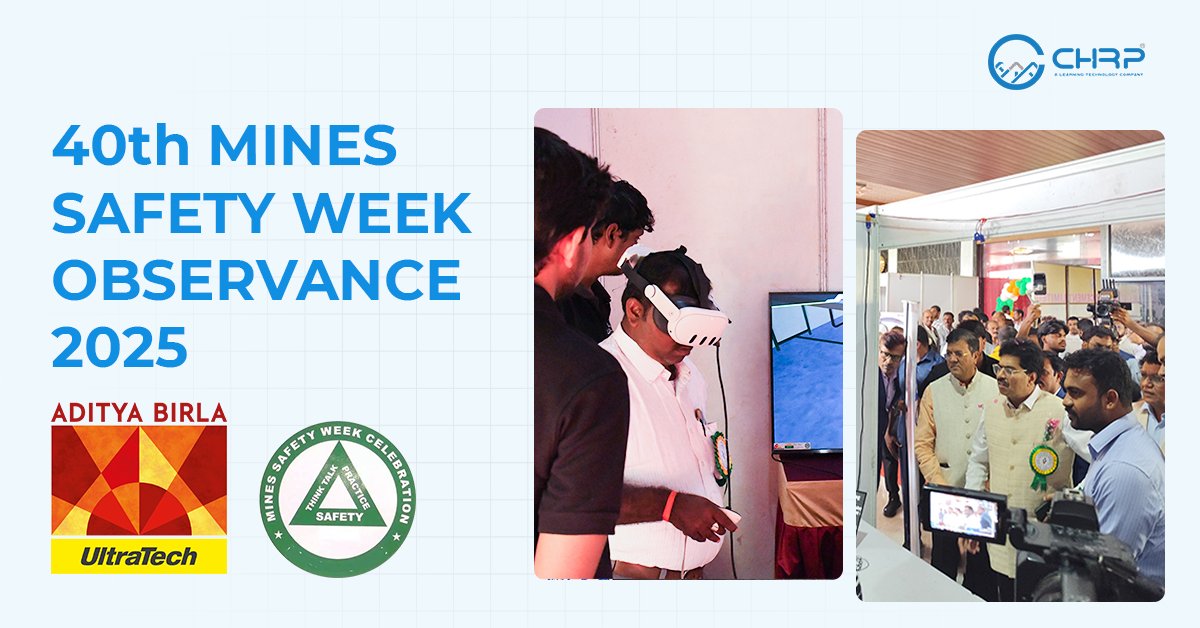
Industries such as oil & gas, mining, construction, and manufacturing are increasingly investing in industrial VR solutions to strengthen workplace safety.
Virtual Reality Applications in Healthcare
Healthcare organisations are using immersive learning to train doctors, nurses, and medical students more effectively.
Medical professionals can practice complex procedures in virtual environments without risking patient safety.
Some common healthcare VR applications include:
- Surgical simulations
- Emergency response training
- Patient care scenarios
- Medical equipment training
- Anatomy learning
VR allows healthcare workers to repeat procedures multiple times until they gain confidence and accuracy.
This practical approach helps improve both technical skills and decision-making abilities.
Corporate Training and Employee Onboarding
Many organisations are now using enterprise VR for corporate training and onboarding programmes.
New employees can explore virtual office environments, understand workflows, and interact with simulated scenarios before entering real operations.
VR training is also widely used for:
- Leadership development
- Customer service training
- Communication skills
- Workplace behaviour training
- Diversity and inclusion programmes
Compared to traditional presentations, immersive training creates higher engagement and participation.
Employees remember practical experiences far more effectively than passive classroom sessions.
Virtual Reality Applications in Oil & Gas
The oil & gas industry involves hazardous operations where practical training is critical.
Virtual reality technology helps organisations train employees safely without exposing them to real operational risks.
Oil & gas companies use VR training for:
- Offshore platform training
- Emergency evacuation drills
- Equipment maintenance training
- Hazard identification
- Process plant operations
Because employees can practice repeatedly, organisations improve operational readiness and reduce workplace incidents.
This is one of the reasons immersive training is becoming a major part of workforce training strategies in the energy sector.
VR Training for Equipment Maintenance
Equipment maintenance is another important application of virtual reality.
Technicians can learn step-by-step maintenance procedures using 3D virtual simulations before handling expensive equipment in real environments.
This is especially useful for industries using:
- Heavy industrial machinery
- Electrical systems
- Manufacturing equipment
- Process control systems
- Large mechanical assets
Simulation-based learning reduces maintenance errors while helping technicians learn faster.
Virtual Reality Applications in Education
Educational institutions are also adopting virtual reality applications to improve student engagement.
Instead of only reading textbooks, students can interact with immersive digital environments that make learning more practical and visual.
Examples include:
- Virtual science labs
- Engineering simulations
- Technical skill training
- Medical education
- Historical recreations
- Interactive classroom experiences
Immersive learning helps students understand complex concepts more effectively while making education more engaging.
Why Businesses Are Investing in VR Training
The growing adoption of enterprise VR is driven by real business benefits.
Better Employee Engagement
Interactive training keeps employees more involved compared to traditional classroom methods.
Higher Knowledge Retention
Employees remember practical experiences more effectively than theory-based learning.
Improved Workplace Safety
VR safety training allows workers to practice hazardous scenarios without real-world danger.
Faster Workforce Training
Employees can repeat simulations multiple times, helping them learn faster and build confidence.
Reduced Operational Risks
Companies reduce training-related risks, equipment damage, and operational downtime.
The Future of Virtual Reality Applications
The future of virtual reality applications looks extremely promising.
As VR hardware becomes more affordable and accessible, more industries are expected to adopt immersive learning and workforce training solutions.
Future trends include:
- AI-powered VR learning
- Multi-user virtual training environments
- Digital twin simulations
- Remote immersive collaboration
- Mobile-connected VR systems
Over the next few years, enterprise VR is expected to become a standard part of workforce development and industrial training.
How CHRP-INDIA Pvt Ltd Supports VR Training Solutions
CHRP-INDIA Pvt Ltd helps organisations develop advanced VR training and immersive learning solutions for enterprise workforce development.
The company supports industries such as manufacturing, mining, industrial safety, and technical operations with practical simulation-based learning experiences.
By combining immersive training technologies with industry-focused learning strategies, CHRP-INDIA helps organisations improve employee engagement, safety awareness, and workforce readiness through interactive VR solutions.
Conclusion
Virtual reality applications are transforming how businesses train employees across industries.
From manufacturing and healthcare to oil & gas and corporate learning, VR training is helping organisations create safer, faster, and more engaging workforce training experiences.
As businesses continue investing in immersive learning and enterprise VR solutions, virtual reality technology will play an even bigger role in workforce transformation and operational excellence.
For organisations looking to modernise workforce training, VR is no longer a future concept. It is already becoming a practical business advantage.