
Enterprise learning is moving beyond simply delivering courses and recording completion.
For years, classroom training, eLearning and Learning Management Systems have helped organisations provide structured learning at scale. These methods continue to be important, but L&D leaders are increasingly asking a different question: Can employees actually apply what they have learned when faced with a real workplace situation in industries such as manufacturing, construction and other.
This is one reason Scenario based learning in 2026 is gaining greater attention. Instead of only presenting information, scenario-based learning allows employees to make decisions, solve problems and practise realistic situations before they experience them at work.
For enterprises, the focus is gradually shifting from course completion towards workforce readiness.
Workforce Challenges Driving the Shift in Enterprise Learning
The skills required in the workplace are changing rapidly.
According to the World Economic Forum’s Future of Jobs Report 2025, employers expect around 39% of workers’ existing skill sets to change or become outdated by 2030. Organisations are therefore increasing their focus on workforce upskilling and continuous learning.
The challenge is not simply providing employees with more courses.
Many modern roles require problem-solving, judgement, communication, technical decision-making and the ability to respond when conditions change. These capabilities are difficult to develop through information-based training alone.
This is particularly important in manufacturing, oil and gas, mining, energy and other operational environments where employee decisions can directly influence safety, quality and productivity.
Scenario-based learning helps organisations move from explaining what employees should do towards allowing them to practise how they should respond.
Why Knowledge-Based Training Is No Longer Enough
Traditional digital learning is highly effective when employees need to understand a policy, process, concept or product.
The limitation appears when employees need to apply that knowledge.
A technician may understand an equipment maintenance procedure but still struggle when an unexpected condition appears. A supervisor may know the principles of conflict management but find it difficult to apply them during a challenging conversation. Similarly, an employee may complete safety training successfully but fail to recognise a hazard in an unfamiliar environment.
Scenario-based learning places the learner inside the problem.
Instead of asking employees to recall an answer, it requires them to assess a situation, consider available options and make a decision.
The scenario can then respond to that decision by providing feedback, introducing consequences or moving the learner to the next stage.
This creates a stronger connection between training and real workplace performance.
How Scenario-Based Learning Is Being Used
Scenario-based learning does not always require Virtual Reality.
The right format depends on what the employee needs to practise.
An eLearning programme may use branching scenarios where learners choose how to respond to a customer, colleague or workplace issue. Leadership programmes can simulate difficult conversations and team-management situations. Compliance training can present realistic ethical or regulatory decisions.
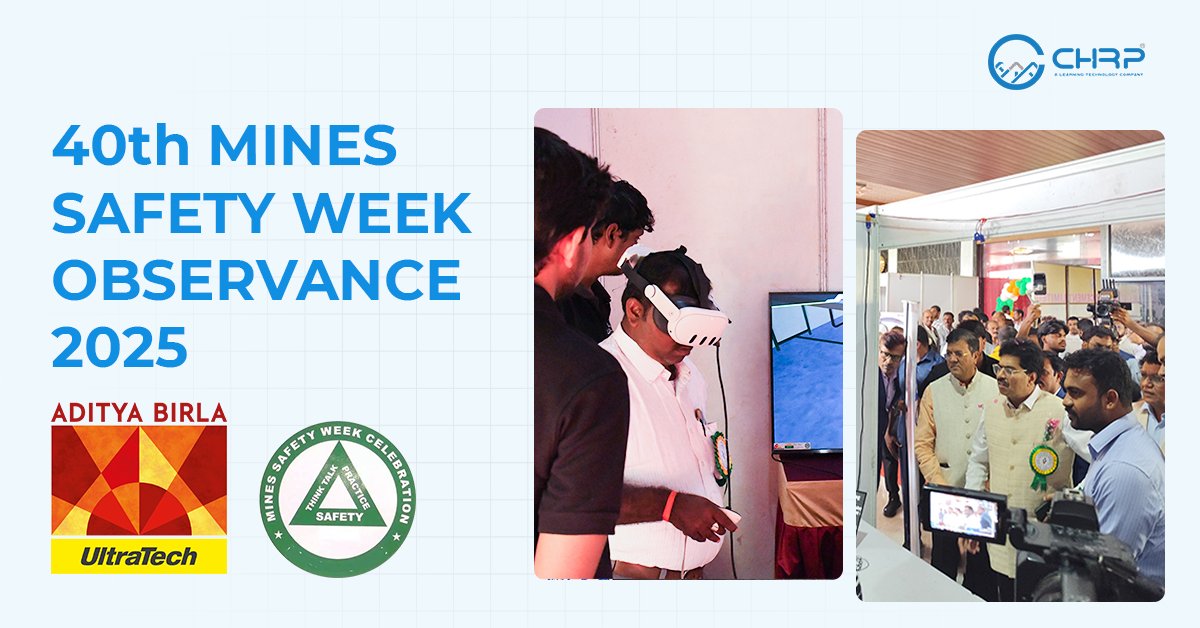
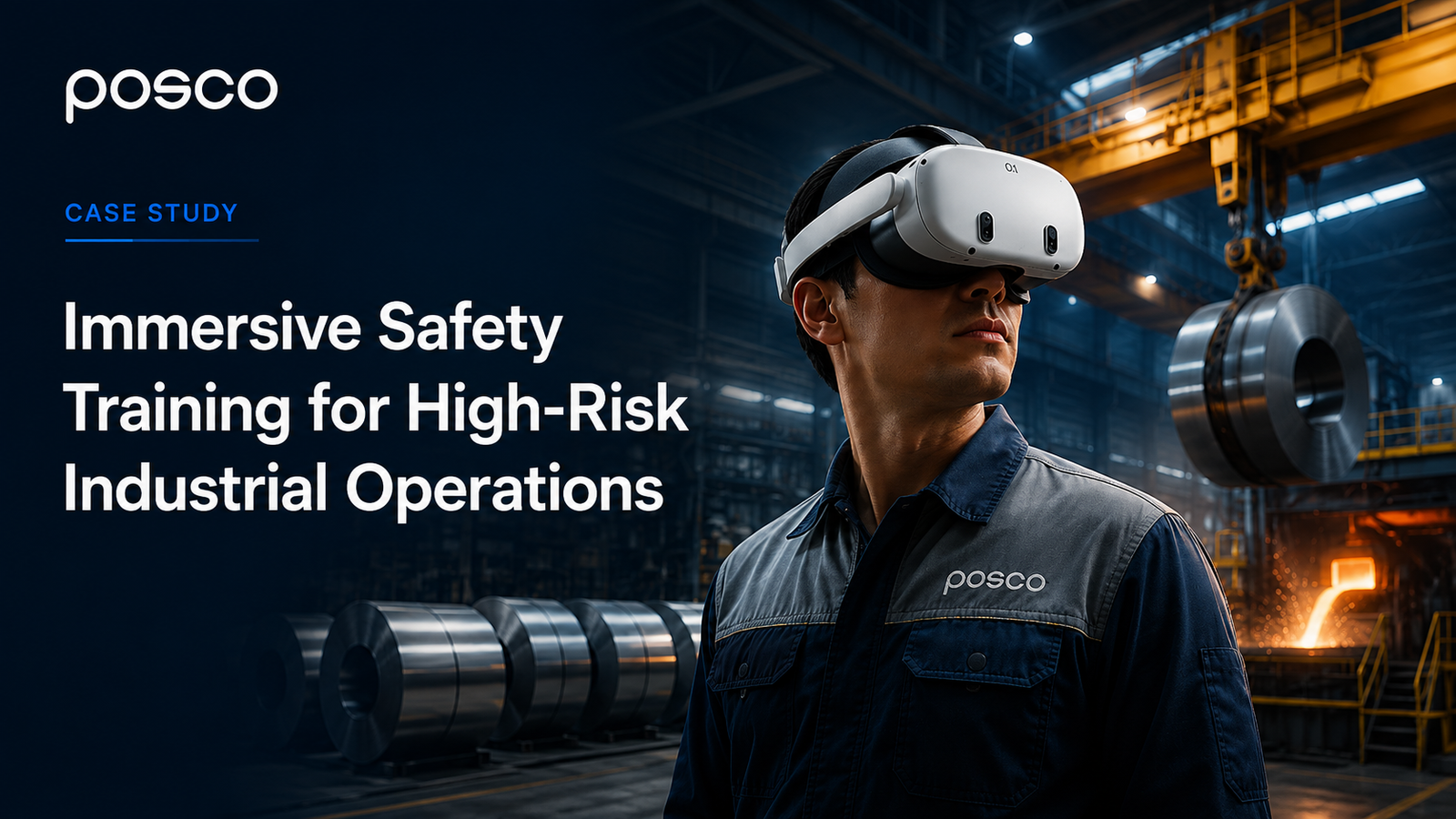
For technical and safety-critical work, immersive technologies such as Virtual Reality and Mixed Reality can take scenarios further.
Employees can enter simulated industrial environments, interact with equipment, identify hazards and practise procedures without interrupting live operations.
For example, workers can practise lockout and tagout procedures, emergency response, equipment familiarisation, working at height or confined-space activities in a controlled environment.
The technology itself should not drive the decision.
The more important question is:
What does the employee need to practise that conventional training cannot provide effectively?
Scenario-Based Learning for Industrial Workforces
Industrial organisations have an additional reason to consider simulation-based learning: many workplace situations cannot be recreated safely or repeatedly.
A refinery cannot create a real fire simply to train employees on emergency response. A manufacturing plant cannot repeatedly stop critical equipment for every new employee to practise maintenance procedures. Mining and energy organisations may also operate in environments where practical training requires significant supervision and safety controls.
Scenario-based learning provides an opportunity to recreate selected situations without exposing employees to the actual operational risk.
Learners can practise procedures, make decisions, experience the consequences of incorrect actions and repeat the activity until they understand the expected response.
This does not mean simulations should replace practical field training.
Instead, employees can arrive at supervised workplace training with greater familiarity and a clearer understanding of the procedure, potentially making practical training more focused and effective.
Designing Scenarios Around Real Business Challenges
The effectiveness of scenario-based learning depends heavily on how the experience is designed.
Not every training programme needs simulation or complex branching interactions.
The strongest scenarios usually begin with a clearly identified workplace problem.
Perhaps new employees require excessive supervision after training. Operators may repeatedly make the same procedural mistake. Safety teams may notice that employees understand safety rules but struggle to recognise hazards in real environments.
These situations provide meaningful starting points for scenario development.
Instead of creating a broad simulation covering an entire process, organisations can focus on the specific decision or behaviour that needs improvement.
The objective should not be to create the most technologically impressive learning experience.
It should be to create the right practice experience for the performance problem.
The Role of Scenario-Based Learning in Enterprise L&D
Scenario-based learning is not replacing eLearning, classroom training or LMS platforms.
Each method serves a different purpose.
eLearning can efficiently build foundational knowledge. Instructor-led programmes can support discussion and collaboration. Scenario-based learning can provide decision-making and practical application. Workplace assessment can then confirm whether employees can transfer that learning into real performance.
The opportunity for L&D leaders is to connect these approaches into a more complete learning strategy.
As workforce skills continue to change, organisations will increasingly need training that prepares employees not only to remember information, but also to apply it confidently in realistic situations.
Conclusion
The growing interest in Scenario based learning in 2026 reflects a broader change in enterprise learning.
Organisations are looking beyond course completion and focusing more closely on whether employees can make decisions, solve problems and perform effectively in real workplace situations.
Scenario-based learning helps close the gap between knowing and doing by providing meaningful opportunities to practise before performance matters on the job.
CHRP-INDIA supports enterprises in developing scenario-based learning through custom eLearning, simulation-driven experiences and immersive XR solutions designed around real workforce and operational requirements.
For L&D leaders, the objective is not simply to make training more interactive. It is to build a workforce that is better prepared to perform.